Whether you're a professional office manager or a first grader, paperwork is a part of your life. With paperwork comes tape, folders, paperclips, pens, scissors, staples, and a bunch of other stuff that clutters up drawers, desks, and entire office areas. Though paper is recyclable, it still seems wasteful when you think of all the business cards, calendars, newsletters, appointment reminders, and bills that have gone through your home. Today we're going to stem the flow and make your office, whether it's a counter or a whole room, into a manageable, organized space.
Let's start by listing the things you need from an office. I surf the web, manage my finances, work on my writing, schedule appointments, write letters, put together photo albums, and review to-do lists. You may draw, coordinate schedules, book vacations, conduct business, place orders, or plan for the future. An office serves many purposes, but I find it to be helpful to identify the ones you use most. When you know what you do most often in your office, you know what processes you'll use often, and what supplies you'll need.
Luckily, we live in a time where almost everything can be digitized and managed online. The fastest way to get rid of office supplies is to put everything online. When you e-mail documents, use Google calendar, shop and pay bills online, and keep digital records, all you need for an office is a laptop. I used to aspire to this kind of simplicity, but for many things I work more easily off of paper. For example, I keep a paper calendar, rely on a physical address book, and prefer to send handwritten letters and cards. I also receive printed papers from organizations for my grant writing work, keep important documents in physical form, and relish writing and drawing in a journal. I used to have boxes of office supplies and paperwork, but have since cut my things down to one shoe-box of supplies and two magazine files of paper. I miss nothing, and actually find myself more creative without all the junk confusing my senses.
The first, and most expensive (but also most impactful) thing I did was get a scanner and scan everything I could. I took apart my yearbooks, went through years of letters, and got rid of all of my old schoolwork. I have everything in digital form now, which gives me peace of mind (further enabled by regularly backing up my computer), and I keep only the most important things in their original paper form. This allowed me to get a few vertical files and keep all of my papers in six inches of bookshelf space, rather than several cubic feet of file-box storage.
Next, I went through my common processes, and looked at what I needed to complete them. A dependable pen with a few replacement ink cartridges in reserve, index cards, post-it notes, a pair of scissors, some glue, a Sharpie, a small amount of paper clips, note paper, a few vertical file folders, and some art supplies were all I really needed. Staples were replaced by paper clips, tape was replaced by glue, and I saved a lot of space by choosing not to have a printer. What I do need to print off I can go to the local copy shop for; the extra effort makes sure I don't mindlessly print anything I don't need.
Now I have more space in my home office (really just a desk in the corner), and I never wonder what to do with myself when something comes up. I have a dedicated to-do list on my phone, a calendar in the back of my journal, an index card full of thoughts and ideas, a computer for my bills, and a scanner for anything I want to look at later. I decline reminder cards by writing appointments in my calendar as soon as they're made, take pictures of business cards with my phone and hand them right back, and get so little junk mail that it's easy to call the company and be removed from their mailing list. By identifying things I do regularly, and working out the best way for me to take care of them, I've streamlined my time, gotten rid of clutter I don't need, and ended the once-endless flow of paper through my home. I have a lighter footstep on the planet, but more importantly, less weight on my mind.
First time reading about a hundred steps to zero waste? Go here for the introduction and index.
Showing posts with label organization. Show all posts
Showing posts with label organization. Show all posts
Saturday, February 23, 2013

Tuesday, January 22, 2013
Step Twenty-Two: Organize Your Living Room
I love browsing through better living-type magazines and Pinterest in part because of the beautiful homes they showcase. Looking at an organized, color-coordinated, and cozy living room makes me want to jump into the picture so that I too can curl up with a book or host game night on a whim. Of course, it only took a few moments of introspection to realize that I don't want a cottage-style home or the latest side table from Pottery Barn, what I want is a clean, comfortable space of my own, where gathering friends and family is convenient and fun, and which only contains things I love, use, and am willing to dust.
Part of the appeal of a zero waste lifestyle is the clearing of things you don't need to make room for the experiences you want. Humans are social creatures, and so in one form or another we crave contact and positive interaction. That's why today's baby step is to clean, clear, and organize your living room. Having a comfortable common space will give you the opportunity to gather your loved ones together, enjoy your hobbies, and provide you with a concrete reminder of why you're working towards zero waste.
Many wonderful people advocate clearing out a space entirely when reorganizing, then returning only the functional or beautiful things. I'm kind of lazy, so instead I like to take a pen and paper into a space completely separate from the one I plan to declutter. Sometimes that has meant leaving the house entirely, in which cases I've been very grateful for my local library. Being someplace out of sight of the space in question helps me to clear my mind of distractions so that I can freely visualize what I truly want the room to look and feel like.
When you think of your home's living room, what do you want from it? A place to watch TV, play games, have friends over, engage in hobbies, read, visit with loved ones, exercise, or nap? What furniture and items make you comfortable? Do you like walls lined with bookcases, family photographs, framed art, your children's drawings? How do you want to lay out the room so that you and your guests can comfortably move and interact? Would you rather usually be facing the TV, the window, or have options for both? Now is the time to daydream until you have a clear and happy idea of your ideal living room.
Once you have this picture in your head, write down what physical things are there. Furniture, electronics, decorations, and functional objects like scissors or clocks all should be written down. Don't be intimidated or feel pressured if your list is long; it often takes many things to make a home. The most important part of the exercise is that you write down only what you truly want in your ideal space. Any heirloom, just-in-case, or there-out-of-habit things that you don't freely imagine as part of your dream room don't get written down. I recommend writing a list because I tend to think in lists and charts, if you're more visual, draw a picture of your ideal space instead, or you could even assemble an inspirational collage.
It might take several tries before your list is refined and you feel confident that it's what you want. That's okay, take your time. Once you have your list, use it as a guide to clean, clear, and reorganize your living room. Don't be afraid to modify your list, even after you've started working from it. Being flexible is an important part of being happy.
When you're ready to tackle the physical work, start by clearing the room of things that don't belong. Donate things that you don't want or no longer use. Return out-of-place items and family member's belongings to the correct room. Compost, recycle, and even trash things that won't be useful to you or others. I find it helpful to have a dedicated tote bag for returnable things like movie rentals and library books so that they have a place when they're in your home, and you don't have to scramble when it comes time to return them.
Give everything that remains in the living room a designated home so that you and those you live with always know where to put it away. Now is the time to rearrange furniture if you like, or even to go shopping for any missing items that would enhance your quality of life (check the thrift store first!). Don't wait to paint the walls, hang art you've always loved, organize your personal library by color, or set out knick-knacks that make you smile. The more welcoming your living room is, the more time you'll spend in it, and the more likely you'll want to keep it neat and usable.
If you have financial constraints and can't afford the extra bookcase you need, chair you'd love, or paint you adore, make space in your budget now to start saving for these items, even if you can only put away a little at a time. Freecycle and Craigslist are great resources for affordable things, or even just make-do items. In the meantime, use what you have until you can afford what you want. Books can be stacked on the floor and space left empty, it's likely no one will notice. While waiting you might even decide you don't need that thing after all, you may come up with a solution you love more, or, at the very least, you'll become more assured that you've made the right decision to buy the item you've waited so patiently for.
Now the best part, go live in your living room. Use it to scrapbook, talk, host cookie exchanges, tickle your children, watch Frontline, knit, sew, play games, send e-mail, pet your dog, assemble puzzles, gather your family around pizza and movies, take a well-deserved nap, write letters, and, most importantly, keep dreaming of what you want in life.
Feel like you need more intensive help in cleaning and organizing your living room? I highly recommend The Joy of Less by Francine Jay, and Unclutter Your Life in One Week by Erin Doland. These two books cover everything you need to know to simplify and streamline your home, and were my two favorites in helping me transition from pack-rat to minimalist.
First time reading about a hundred steps to zero waste? Go here for the introduction and index.
Tuesday, August 21, 2012
Step Thirteen: Set Up Your Pantry
Procrastinating Writers Note: I know blog posts are more fun with pictures, so expect some to be posted in the next few days or so. In the meantime, I'll be charging my camera. Sorry.
The last time I helped my grandma clean out her pantry, we found a canned chicken from 1976. My sisters and I treated that chicken as an honored family member, and, after setting a place for it at the dinner table for a week, we put it in the back of the pantry for our own children to one day find. Needless to say, my grandmother does not have a well-organized pantry. Buckle up though, because after some intensive reading, you're about to.
I promise, organizing your pantry will have great benefits (zero waste and otherwise). First of all, you'll be able to see what you have so you can use it up before it goes bad (something in there already turned? No problem, just compost it). Second, you'll know what foods your family consumes most and least, which will allow you to prioritize your bulk-food hunt. Lastly, having an uncluttered pantry will give you peace of mind and allow you to prepare meals quickly and easily, a boon to any household, not just a zero-waste one.
Let's dive right in by taking everything out of your pantry. Anything that isn't nailed or glued down should come out. If you're lucky, it will all fit on your counter and/or table space, if not, get creative with chairs and other furniture. Now that you have an empty pantry, take some time to clean it out. Scrub away any spills or sticky spots, wipe the dust off of everything, and sweep out the floor or the bottom of the space.
Now take a look at all the things you've taken out of the pantry. Odd items (old grocery bags, cans of WD-40, and stray toys) should be put away in a designated home that makes sense to you. If you like having spare light bulbs in your pantry, leave them ready to go back there, but if those items could be more sensibly stored elsewhere, find them a spot now. Next, look through all the food items. Anything that's gone stale, sour, mushy, or is past its expiration date should be composted, and its packaging recycled. Remember, food has a lot of nitrogen in it, so balance out your compost heap by adding some newspaper for its carbon content if you find you have a lot of stuff from your pantry to dump.
This next part is the step I find most fun, though I understand some people don't quite get the high out of categorizing and ordering that I experience. Again, the idea is to make a system that works for you. Try to put food back in a pattern that makes it simple for you to access and restock your pantry. Some people put like with like (all the spices on one shelf, all the cans on another), and others organize by meal (macaroni and cheese boxes next to the canned peas, noodles by jars of Alfredo sauce). A lot of houses and apartments don't have a pantry, so you may be organizing your food by cupboard, or you may want to put kid-friendly snacks and cereals on a lower shelf for the little ones, while foods that need more preparation find their place on the higher levels. Take some time to figure out what makes the best sense for you and your family, I promise the extra thought now will be worth it later.
At this stage don't worry about what food packaging you're putting back onto your shelves. It's better to eat through what you have than get rid of everything and start with a new and unfamiliar system. We'll address the zero waste transformation of your food later.
Once you've gone through this process with your main pantry, continue through the rest of the food-centered locations of your kitchen. Turn out food storage cabinets, empty out all cupboards, clear off all shelves, and brave the depths of your refrigerator and freezer. Clean the space thoroughly, toss rotten food, and return the rest of your goods in the system you've decided on. Now pat yourself on the back for all your hard work, and take a moment to admire your beautiful new kitchen (sneak yourself a treat while you're at it; what's the good of knowing where the cookies are if you don't eat one?).
Stay tuned for part Thirteen and a Half: Evaluating your Food. This post was getting long, and this really deserves a step all its own. In the meantime, enjoy your lovely, easy-to-use food system.
First time reading about a hundred steps to zero waste? Go here for the introduction and index.
Thursday, June 21, 2012
Step Nine: Set Up Your Recycling System
For this post I'm going to try something different. I find it's very easy for me to rave about zero waste and all the ways of going about it, but I worry that it makes my writing a chore to slog through and that I'm alienating my readers because they look at it and automatically respond TL;DR (too long; didn't read).
So here is the short version of this post, followed by the long version. Kindly tell me which version you liked better, and why, in the comments so that I can better edit my writing for all you budding little greenies. Also, how many pictures do you like in the average post (none this time, sorry, my camera is on the fritz)?
The Short Version: Set Up Your Recycling System
In my quest for zero waste, I don't consider things which can be recycled indefinitely, or which are biodegradable at the end of their recycling lifetime, to be garbage. I think that managed responsibly and used in moderation, things like cardboard, canned food, and glass bottles are fine. Because of this, I need to have a system in place to make sure these things get recycled. Having a system ensures that even when I'm feeling tired or lazy, all I have to do is put something in the right bin, and it will get taken care of.
Eventually I'd like to build a rack to hold matching canvas bags, with a box at the bottom, and a compost bin on the side. Sort of like this Ikea version, but made of ecologically sound materials. For now I have a rag-tag collection of old wastebaskets and beat-up gardening pots. It's not very pretty, but it works.
I have a bin for paper, cardboard, metal, plastic (I'm the only member of my house to fully commit to zero waste, everyone else is holding out until I show them that Gatorade isn't a necessity), glass, and compostable items. I also have two boxes; one for donation items, the other for odd bits and bobs that can be used in art projects, like spent gift cards, scraps of yarn, and found earrings.
When any of the bins get full, I pack up the contents and take them to the nearest business or organization that recycles that material. I empty the compost bin often, and find it's very handy to have a whole mess of cardboard just waiting to supplement my pile, should it ever run low on good carbon sources. I always rinse out food containers so my recycling doesn't become a haven for pests and curious dogs, and I make sure to write anything of value I'm donating on the side of the thrift store box so I'll remember to get the tax credit.
Overall, having a recycling system lets me save time and keep my house tidier, though I have had to re-sort things once in a while when other members of my household slip-up. This could be solved by clear labels, in both words and pictures, and a more uniform set of bins. I think I see a summer project.
The Long Version: Set Up Your Recycling System
Though some may disagree with me, I'm of the mindset that things which can be recycled indefinitely are okay to use, so long as I make sure to buy the recycled versions of these products to begin with, advocate actively to make recycled versions the standards in these industries, and avoid buying products than can be replaced by reusable counterparts reasonably. This means I don't use paper towels, canned tomato sauce, or subscribe to print magazines, but I do keep a roll of recycled toilet paper handy, indulge in canned clams occasionally, and write numerous e-mails requesting all-recycled packaging and components.
Since I have recyclables to take care of, and since curb-side pick-up is not an option in my current apartment (the city offers it, the landlords just don't participate), I find the process of recycling is made much easier by having a designated recycling station in my home. When any of the bins are full, I just cart them to the local business or organization which recycles those particular materials. I even have bins designated specifically for thrift shop donations, craft project reuse, and possible-to-compost materials.
Currently I use a rag-tag collection of old trash cans, garden planters, and beat-up kitchen containers to separate my recyclables, but as my family grows, I think I slim it down to a uniform system with clearly designated labels.
I realize that many communities (mine included) have single-stream recycling programs, but when possible I like to participate in programs that require you to separate your waste. This creates less-contaminated recycling material, which in turn encourages more efficient and more prevalent recycling. Additionally, this helps me examine my cast-offs easily to see if there's a more sustainable alternative I could be using.
Using these Ikea bags as inspiration, I think I'll eventually make my own recycling station out of canvas with a wooden support frame. Of course, these bins would work great as well, especially in a home with limited floor space, though they seem a little frustrating to empty. The most important thing though, is to set up a system that everyone in your home can understand. If you entertain frequently, perhaps lids with bold labels could help guests from putting a soda can in with the newspapers. For homes with preschool aged children, labeling your recycling station with pictures instead of words could help little ones know where to put that empty juice bottle. If you live with chronically disorganized people, the most fool-proof solution (and what I often resort to with my husband) is to have only one small trash can accessible in the house; after they throw garbage in, you sort recyclables and composting out. This last option is work-intensive, but I find it the easiest, and most tension-free, solution in my home.
Two key components of my cast-off sorting system are boxes for donations and reusables. Almost always, while decluttering, I'll find something I don't use anymore, but which could still be useful to someone else. Rather than deal with these objects individually, I just put them in a cardboard box. When the box is full, off it goes to the thrift store. Likewise, in my various activities I find little bits of material that have the potential to be useful, just not immediately so. I have an old shoe-box I use for little bits of yarn, fabric, or embellishments. In my old apartment, I used to tie these to a chain-link fence as colorful reminders of the little bits of waste that slip through the cracks. It made for an interesting, purposeful collage, and I very much enjoyed making it. Now I just use the scraps to decorate current projects I'm doing (old beads for doll eyes, etc.), and when the box begins to overflow I donate it all to a local preschool, where the kiddies use up the scraps in their craft projects far faster than I could.
As always, composting is my first choice for waste, and I do all I can to make sure that what refuse I do create will biodegrade easily. Eating a diet with lots of vegetables and other unprepared foods provides plenty of material for the compost bucket, buying only used clothing made of natural fabrics (like cotton, wool, and linen) ensures that I'll have the lightest impact with my sartorial choices and can confidently compost my garments when I'm done with them, and accepting only take-out food in biodegradable containers means I can take a night off from cooking without harming the planet. I find that sorting my recyclables additionally helps with my composting, as it's easy to dump the cardboard and paper bins into my compost pile whenever it's lacking in a source of carbon.
In short, setting up a sorting and recycling system in my home makes it easy to responsibly handle my recyclables, monitor the amount of waste I generate, and keep on top of removing unneeded things from my home. Maintaining a good system is like writing things down; it helps keep me prepared for life and lets me throw away as little as possible.
First time reading about a hundred steps to zero waste? Go here for the introduction and index.
Monday, May 21, 2012
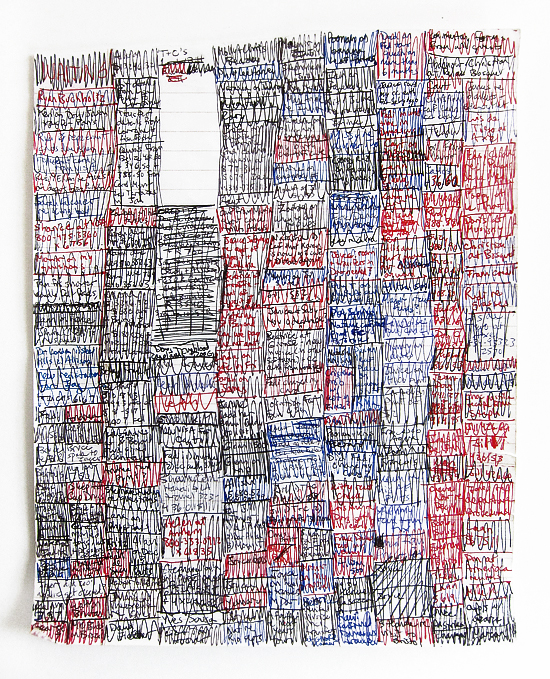
Step Eight: Write Things Down
I love lists, calendars, and notebooks. My fiance might accuse me of being obsessed with them, but I like to think that I am just well-organized. I consider my network of paper and computer files a way to outsource basic tasks so I can free up brain-power to work on more difficult problems (like how to get Ghirardelli to package their delicious chocolate squares in biodegradable cellophane, rather than the plastic-based packaging they use now. I'm not ready to give up my daily chocolate square). By writing things down, I don't have to devote mental energy to remembering them, I simply make checking my notes a regular part of my day.
This is all well and good from an organizational and productivity standpoint, but it also significantly helps me in my zero-waste lifestyle. By keeping an updated calendar it's easier for me to take the bus or walk places, rather than have to drive there in a rush when I realize I'm half an hour late. Knowing what I'm going to do on any given day allows me to prepare with the necessary tote bags, take-out containers, or biodegradable poop bags (for the dogs, fyi). Keeping track of errands I need to run lets me do them all at once and save on gas, rather than one at a time. Most importantly, writing things down helps me keep undesired junk and garbage out of my house; I have a list of what items I need to get, gifts I know people will like, and business websites to check out. That eliminates unnecessary purchases, saves me time in stores, and lets me refuse flyers and freebies while maintaining confidence that I'll remember to follow up on products or services I like.
Of course, living in the marvelous time that we do, one needn't carry any paper at all; most of this information can be contained on a single smartphone kept in a pocket. For those of us on the poorer end of the spectrum, or for those who maintain their suspicions about Skynet, a single notebook makes an affordable, handy alternative. I used to carry over half a dozen notebooks everywhere with me to keep track of my finances, ideas, to-do lists, calendar, knitting patterns, journaling, and school-work. But recently, with the addition of a kindle and completion of school I've been able to slim my notebooks down to one Moleskine, which I make tabbed sections in for finances, ideas, and calendar items. I journal through the rest of the book, keep fleeting, impermanent notes on post-its that I've stuck inside the cover, and keep track of my to-do lists on separate index cards which are held in the back pocket. This sounds complicated, but in practice it's become quite easy and works well for me, as I now need to carry only one notebook, leaving more room in my bag for other things, and helping to correct my spinal oddities.
Though I'm convinced my system is the best, I acknowledge that this likely isn't the case. Many people feel more comfortable carrying a planner, maintaining their finances online, using a single sheet of paper for to-do lists, or keeping reminders of things on the front of their refrigerator. Some people find lists distracting and would rather just do things as they come up. Many families find that a large communal calendar with a section for notes keeps everyone coordinated.
No matter what system you find works best for you, I'd definitely recommend at least writing down appointments you have to keep, and things you need to do. Think of your brain's frontal cortex as a small table; you can do infinite activities on this table, but your innovation and flexibility decrease dramatically when clutter fills up the table. If you're trying to remember to call your Aunt Minnie while you're working on a report for your boss, it's like having a picture of your aunt and a large telephone on the table while you're using a typewriter, reading through previous reports, looking at a picture of your possibly angry boss, and going through stacks of charts, graphs, and other information you need to write the report in the first place.
As much as we like to think we can multitask, we really can only do one thing well at a time (possibly two, if one is a physical activity and the other is mental, but that's about the limit). By making a note outside of your brain to call Aunt Minnie, you free space on your tabletop to focus on what you're doing, which also allows you do it well. Unfortunately, mental notes don't help in this situation, because it's like putting the telephone and picture of your aunt on your lap--sure, it's not in your real work-space, but it's still cluttering up your unconscious mind and hindering your ability to work at your best.
By writing down appointments to keep and tasks to do, you'll better be able to evaluate your needs and plan your day. Additionally, it's easier to see the nonphysical waste in your life when you write it down. I didn't enjoy watering my lawn, so I got rid of the lawn, freeing up my time for more enjoyable pursuits, like tending to the food garden I used the space for instead. Likewise, I found that keeping up with my family is important to me, and so I gave up some television time in order to write everybody once a month. Lastly, my time isn't eaten up with the nagging feeling that I've forgotten something at the grocery store or missed a doctor's appointment. When I outsource things to my notebook, I know where to look to make sure everything gets done, instead of wondering about it and dawdling while I try to think.
Arguably, using paper to write things down may be wasteful, but most types of paper are recyclable, and the rest is usually biodegradable (I compost my post-it notes), and I feel the benefits far outweigh the negatives. By writing things down I free up precious space in my brain, have a centralized location to check what I need to do for the day, and allow myself to stay on track by jotting notes about to-do items that float through my head and then return to the primary task. I promise you, establishing the habit of writing things down, in whatever form you choose, will help you significantly to have a happy, remarkable, waste-free life.
First time reading about a hundred steps to zero waste? Go here for the introduction and index.
 |
| If writing isn't your thing you can always draw stuff. |
Of course, living in the marvelous time that we do, one needn't carry any paper at all; most of this information can be contained on a single smartphone kept in a pocket. For those of us on the poorer end of the spectrum, or for those who maintain their suspicions about Skynet, a single notebook makes an affordable, handy alternative. I used to carry over half a dozen notebooks everywhere with me to keep track of my finances, ideas, to-do lists, calendar, knitting patterns, journaling, and school-work. But recently, with the addition of a kindle and completion of school I've been able to slim my notebooks down to one Moleskine, which I make tabbed sections in for finances, ideas, and calendar items. I journal through the rest of the book, keep fleeting, impermanent notes on post-its that I've stuck inside the cover, and keep track of my to-do lists on separate index cards which are held in the back pocket. This sounds complicated, but in practice it's become quite easy and works well for me, as I now need to carry only one notebook, leaving more room in my bag for other things, and helping to correct my spinal oddities.
 |
| It's very satisfying to see stuff get done. |
Though I'm convinced my system is the best, I acknowledge that this likely isn't the case. Many people feel more comfortable carrying a planner, maintaining their finances online, using a single sheet of paper for to-do lists, or keeping reminders of things on the front of their refrigerator. Some people find lists distracting and would rather just do things as they come up. Many families find that a large communal calendar with a section for notes keeps everyone coordinated.
No matter what system you find works best for you, I'd definitely recommend at least writing down appointments you have to keep, and things you need to do. Think of your brain's frontal cortex as a small table; you can do infinite activities on this table, but your innovation and flexibility decrease dramatically when clutter fills up the table. If you're trying to remember to call your Aunt Minnie while you're working on a report for your boss, it's like having a picture of your aunt and a large telephone on the table while you're using a typewriter, reading through previous reports, looking at a picture of your possibly angry boss, and going through stacks of charts, graphs, and other information you need to write the report in the first place.
As much as we like to think we can multitask, we really can only do one thing well at a time (possibly two, if one is a physical activity and the other is mental, but that's about the limit). By making a note outside of your brain to call Aunt Minnie, you free space on your tabletop to focus on what you're doing, which also allows you do it well. Unfortunately, mental notes don't help in this situation, because it's like putting the telephone and picture of your aunt on your lap--sure, it's not in your real work-space, but it's still cluttering up your unconscious mind and hindering your ability to work at your best.
 |
| Nothing says you can't be colorful. |
By writing down appointments to keep and tasks to do, you'll better be able to evaluate your needs and plan your day. Additionally, it's easier to see the nonphysical waste in your life when you write it down. I didn't enjoy watering my lawn, so I got rid of the lawn, freeing up my time for more enjoyable pursuits, like tending to the food garden I used the space for instead. Likewise, I found that keeping up with my family is important to me, and so I gave up some television time in order to write everybody once a month. Lastly, my time isn't eaten up with the nagging feeling that I've forgotten something at the grocery store or missed a doctor's appointment. When I outsource things to my notebook, I know where to look to make sure everything gets done, instead of wondering about it and dawdling while I try to think.
Arguably, using paper to write things down may be wasteful, but most types of paper are recyclable, and the rest is usually biodegradable (I compost my post-it notes), and I feel the benefits far outweigh the negatives. By writing things down I free up precious space in my brain, have a centralized location to check what I need to do for the day, and allow myself to stay on track by jotting notes about to-do items that float through my head and then return to the primary task. I promise you, establishing the habit of writing things down, in whatever form you choose, will help you significantly to have a happy, remarkable, waste-free life.
First time reading about a hundred steps to zero waste? Go here for the introduction and index.
Subscribe to:
Posts (Atom)