There are thousands of things we use only once or twice a year, so why use money and resources to keep them around all the time? Most obviously I'm referring to books (specific books, not books as a category), but this also extends to tools, sports and camping equipment, specialized cooking utensils, crafting supplies, and more.
What you use often or not that often depends entirely on you and your preferences. I use a salad spinner and my knitting needles every day, where-as I only use a casserole dish and a sewing machine a few times a year. I'm happy to re-watch movies over and over again through Netflix, but I find I do better with owning books on my Kindle rather than borrowing them from the library. Knowing these things about myself was part of finding my style, but know that I know it, I'm finding resources to support it. Not buying things has saved me hundreds of dollars, lots of space, and countless hours that would have been spent finding and caring for the objects themselves. However, just because I choose not to own something, doesn't mean I can't ever use one.
This concept is familiar to most of us, though perhaps not in ways we recognize. Of course library books (and magazines, and movies, and cds) come to mind, but if you think about it, sharing is everywhere. Every time we fly on a plane, we're really just renting part of something we couldn't afford on our own. We rent moving trucks, share green-space in our city parks, and share information with each other constantly over the internet. While we certainly wouldn't want to share everything (my underwear are mine and mine alone), I think we can vastly expand our idea of what is share-able.
Sites like Swap Baby Goods, Zipcar, and Rentalic are helping people to share valuable commodities like cars, cribs, and iPads, while sites like U-Exchange and Air BnB even let people share their homes. These services aren't free, but they're a whole lot cheaper than the actual item. Sometimes I like to borrow things to see if it would work for me and my lifestyle; I'm currently renting a camera, and I'm glad I did, because I found out a DSLR is just too big and clunky for me. Other times I just rent something knowing that I don't need it most of the time, just once in a while; every year I rent a truck to haul mulch for my and my loved ones' gardens.
Getting to know your borrowing options will make you more confident when it comes to using somebody else's stuff, as well as help change your outlook on life. Wouldn't it be nice to just borrow something, rather than worry about caring for it indefinitely? Helping the planet by consuming less will leave you with less stress and more money and space. Besides, if you find you need something after borrowing it, well, you'll already know what kind you want, and how to use it, which will save you time when you do get it.
The following is a list of the sharing directories and resources I've compiled thus far. If you know of one I missed, by all means, share it with us in the comments.
Zipcar: the company owns cars which are rented to the public. Cost includes gas and insurance. Located in select cities in the U.S., Canada, and the United Kingdom.
RelayRides: Located in the U.S., RelayRides is a platform for car owners to rent out their cars to candidates screened and insured by the site.
SwapMarket: An all-purpose trading site that lets you "turn what you have into what you want". Users are allowed to list and trade whatever items they want, and may exchange items in person or through the mail. The site has a leg-up over Craigslist and Freecycle (which I still use constantly) as the users are monitored and receive feedback from other members.
NeighborGoods: Users create groups within which they can share goods. The service will close down at the end of July, but will still operate under the new name Favortree.
Rentalic: This site lets you loan or borrow things within your community. Listings are free, though you do pay a fee to rent things. The site monitors transactions, but does not provide insurance.
First time reading about a hundred steps to zero waste? Go here for the introduction and index.
Wednesday, July 18, 2012

Thursday, June 21, 2012
Step Nine: Set Up Your Recycling System
For this post I'm going to try something different. I find it's very easy for me to rave about zero waste and all the ways of going about it, but I worry that it makes my writing a chore to slog through and that I'm alienating my readers because they look at it and automatically respond TL;DR (too long; didn't read).
So here is the short version of this post, followed by the long version. Kindly tell me which version you liked better, and why, in the comments so that I can better edit my writing for all you budding little greenies. Also, how many pictures do you like in the average post (none this time, sorry, my camera is on the fritz)?
The Short Version: Set Up Your Recycling System
In my quest for zero waste, I don't consider things which can be recycled indefinitely, or which are biodegradable at the end of their recycling lifetime, to be garbage. I think that managed responsibly and used in moderation, things like cardboard, canned food, and glass bottles are fine. Because of this, I need to have a system in place to make sure these things get recycled. Having a system ensures that even when I'm feeling tired or lazy, all I have to do is put something in the right bin, and it will get taken care of.
Eventually I'd like to build a rack to hold matching canvas bags, with a box at the bottom, and a compost bin on the side. Sort of like this Ikea version, but made of ecologically sound materials. For now I have a rag-tag collection of old wastebaskets and beat-up gardening pots. It's not very pretty, but it works.
I have a bin for paper, cardboard, metal, plastic (I'm the only member of my house to fully commit to zero waste, everyone else is holding out until I show them that Gatorade isn't a necessity), glass, and compostable items. I also have two boxes; one for donation items, the other for odd bits and bobs that can be used in art projects, like spent gift cards, scraps of yarn, and found earrings.
When any of the bins get full, I pack up the contents and take them to the nearest business or organization that recycles that material. I empty the compost bin often, and find it's very handy to have a whole mess of cardboard just waiting to supplement my pile, should it ever run low on good carbon sources. I always rinse out food containers so my recycling doesn't become a haven for pests and curious dogs, and I make sure to write anything of value I'm donating on the side of the thrift store box so I'll remember to get the tax credit.
Overall, having a recycling system lets me save time and keep my house tidier, though I have had to re-sort things once in a while when other members of my household slip-up. This could be solved by clear labels, in both words and pictures, and a more uniform set of bins. I think I see a summer project.
The Long Version: Set Up Your Recycling System
Though some may disagree with me, I'm of the mindset that things which can be recycled indefinitely are okay to use, so long as I make sure to buy the recycled versions of these products to begin with, advocate actively to make recycled versions the standards in these industries, and avoid buying products than can be replaced by reusable counterparts reasonably. This means I don't use paper towels, canned tomato sauce, or subscribe to print magazines, but I do keep a roll of recycled toilet paper handy, indulge in canned clams occasionally, and write numerous e-mails requesting all-recycled packaging and components.
Since I have recyclables to take care of, and since curb-side pick-up is not an option in my current apartment (the city offers it, the landlords just don't participate), I find the process of recycling is made much easier by having a designated recycling station in my home. When any of the bins are full, I just cart them to the local business or organization which recycles those particular materials. I even have bins designated specifically for thrift shop donations, craft project reuse, and possible-to-compost materials.
Currently I use a rag-tag collection of old trash cans, garden planters, and beat-up kitchen containers to separate my recyclables, but as my family grows, I think I slim it down to a uniform system with clearly designated labels.
I realize that many communities (mine included) have single-stream recycling programs, but when possible I like to participate in programs that require you to separate your waste. This creates less-contaminated recycling material, which in turn encourages more efficient and more prevalent recycling. Additionally, this helps me examine my cast-offs easily to see if there's a more sustainable alternative I could be using.
Using these Ikea bags as inspiration, I think I'll eventually make my own recycling station out of canvas with a wooden support frame. Of course, these bins would work great as well, especially in a home with limited floor space, though they seem a little frustrating to empty. The most important thing though, is to set up a system that everyone in your home can understand. If you entertain frequently, perhaps lids with bold labels could help guests from putting a soda can in with the newspapers. For homes with preschool aged children, labeling your recycling station with pictures instead of words could help little ones know where to put that empty juice bottle. If you live with chronically disorganized people, the most fool-proof solution (and what I often resort to with my husband) is to have only one small trash can accessible in the house; after they throw garbage in, you sort recyclables and composting out. This last option is work-intensive, but I find it the easiest, and most tension-free, solution in my home.
Two key components of my cast-off sorting system are boxes for donations and reusables. Almost always, while decluttering, I'll find something I don't use anymore, but which could still be useful to someone else. Rather than deal with these objects individually, I just put them in a cardboard box. When the box is full, off it goes to the thrift store. Likewise, in my various activities I find little bits of material that have the potential to be useful, just not immediately so. I have an old shoe-box I use for little bits of yarn, fabric, or embellishments. In my old apartment, I used to tie these to a chain-link fence as colorful reminders of the little bits of waste that slip through the cracks. It made for an interesting, purposeful collage, and I very much enjoyed making it. Now I just use the scraps to decorate current projects I'm doing (old beads for doll eyes, etc.), and when the box begins to overflow I donate it all to a local preschool, where the kiddies use up the scraps in their craft projects far faster than I could.
As always, composting is my first choice for waste, and I do all I can to make sure that what refuse I do create will biodegrade easily. Eating a diet with lots of vegetables and other unprepared foods provides plenty of material for the compost bucket, buying only used clothing made of natural fabrics (like cotton, wool, and linen) ensures that I'll have the lightest impact with my sartorial choices and can confidently compost my garments when I'm done with them, and accepting only take-out food in biodegradable containers means I can take a night off from cooking without harming the planet. I find that sorting my recyclables additionally helps with my composting, as it's easy to dump the cardboard and paper bins into my compost pile whenever it's lacking in a source of carbon.
In short, setting up a sorting and recycling system in my home makes it easy to responsibly handle my recyclables, monitor the amount of waste I generate, and keep on top of removing unneeded things from my home. Maintaining a good system is like writing things down; it helps keep me prepared for life and lets me throw away as little as possible.
First time reading about a hundred steps to zero waste? Go here for the introduction and index.
Wednesday, June 20, 2012
Tuesday, June 19, 2012
The Tipping Point
Nature recently released a study showing that we have pushed earth to a tipping point and without committed changes will affect the planet forever by drastically reducing biodiversity. This article nicely sums it up and examines different viewpoints regarding the study, as well as offers a general guide for reform. A nice, short read, but one which people with anxiety should approach with caution.
Here is a funny, if crappy, picture to turn your hyperventilation into laughter.

Here is a funny, if crappy, picture to turn your hyperventilation into laughter.

Monday, May 21, 2012
Prized Possessions or Junk?
This is a reprint of an article I wrote for my main blog, Writer Extroidinaire, but I felt like it could be of some help to people having a hard time letting things go in their quest for Zero Waste.
 I used to be a pack-rat, and in a horrible way. I would save programs that had my name on them, not because the event was special, but just because the piece of paper had my name on it. When I moved out on my own for real (to an apartment, not just a college dorm), I decided that I wanted to have all my stuff in my house with me. Then I realized how much stuff I had, and spent a month getting rid of a lot of it.

 I used to be a pack-rat, and in a horrible way. I would save programs that had my name on them, not because the event was special, but just because the piece of paper had my name on it. When I moved out on my own for real (to an apartment, not just a college dorm), I decided that I wanted to have all my stuff in my house with me. Then I realized how much stuff I had, and spent a month getting rid of a lot of it.
This first round of simplifying and decluttering was easy; there were tons of books I didn't particularly like, clothes I didn't wear or attach sentimental value to, and slips of paper with my name on them that I could get rid of with ease. I got rid of a third of my stuff with no guilt at all, and moved the rest over to my tiny apartment.
Over the next few years I was able to slowly go through a box at a time and downsize my collections. I religiously read unclutterer.com to keep myself motivated and inspired. Occasionally if I had fond memories of something but didn't need it in physical form I would take a picture of it. My Scottie dog sweater from second grade makes me smile, but I get just as much happiness from looking at a picture of it as I do from holding it, so I donated the sweater and keep the picture, which takes up no space at all on my hard drive. This picture taking habit served as a useful and justified crutch, and I was steadily making my way towards a streamlined household that only contained things I loved, used, and could store and care for in a respectful manner.
Then I got evicted. It happened with little warning, when I had no safety net, and for reasons that had very little to do with my qualities as a tenant. My apartment was the first real home I had made for myself, and losing it hurt. A lot. Worse, compounding my problem of having no money, no place to live, and very little time to solve both of these problems, was the fact that I still had boxes of stuff left to evaluate.
With everything happening at once I got rid of stuff. A lot of stuff. I opened all the boxes before I donated them, but that was about it. I panicked, and made a bad situation worse by getting rid of stuff that I used and loved. Moving from a hundred and fifty square feet of apartment to fifty square feet of storage unit and whatever could fit in my car made me freak out and get rid of clothes, books, and project materials that I wasn't really ready to part with.
In an effort to clear out my life's problems, I made a list of everything I needed to live. A tiny wardrobe, a few cooking necessities, and the barest bones of hobby material. Artwork, fun-but-impractical clothing, childhood treasures; none of these things made the list, and so a lot of them got donated. My bright orange coat that made me look like a pumpkin when I wore it was donated, despite the fact that I loved wearing it, and was even designing a leaf hat to enhance the pumpkin look. A juicer that I didn't use on a daily basis was listed on freecycle, even though I was steadily increasing my juicing efforts. A typing table that was tiny but faithfully useful was given away, even though it left me with no place to write.
After the purge, when I had finally settled with my fiance at his parents' house, I started to feel guilty and remorseful. Yes, I got rid of some stuff that I would have gotten rid of anyway, and the fact that I managed to take time to donate or recycle everything brought me some comfort, but the fact of the matter was I'd gotten rid of too much too fast. My anxiety and depression turn this into a worse problem than it actually is, but the situation of losing things that were useful and loved remains.
And here is where this post falls apart, because here is where I am right now. I have a lot less stuff, but now the worry of not having it is replacing the worry of having it. I'm slowly beginning to realize that it was never about the stuff in the first place. I'm worrying because I still really don't have a home, years of work to improve my life was blown to hell in less than a month, and things that enhanced and improved my life are now gone. I can (and do) replace some of the best things on e-bay (let's just say I'm knitting myself a green leaf hat for winter), and the rest I'm starting to realize wasn't that important to begin with. Sure, my Chi hair straightener will cost a lot to replace, but the likely-hood that I'll ever need to do that is small, since I wear my hair short now. And in the case of sentimental objects, I try to remember that releasing them back into the universe to give others joy is a lot better than losing them in a natural disaster, or even than letting them molder away quietly in a box sealed for safekeeping.
If I could do it all over again, I'd definitely do things differently, but I'm living well now with what I have, I'm doing well replacing gnawing guilt with simple regret, and I'm learning to love myself regardless of what I own or what bad decisions I've made. Plus, I'll always have pictures of my favorite dinosaur friends.
Step Eight: Write Things Down
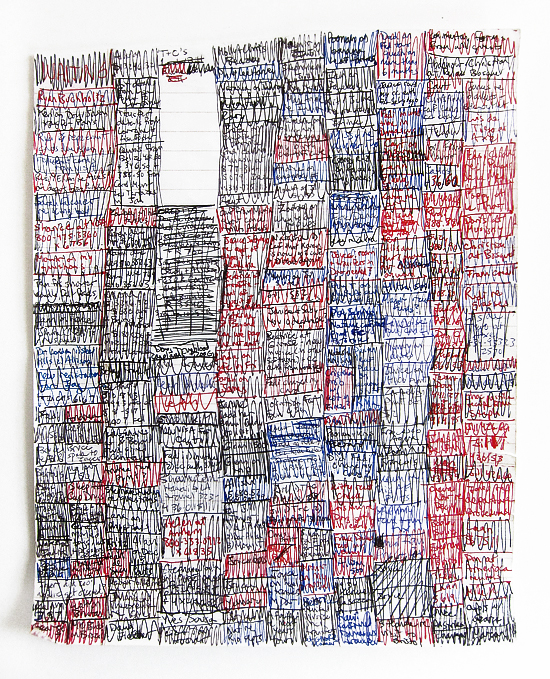
I love lists, calendars, and notebooks. My fiance might accuse me of being obsessed with them, but I like to think that I am just well-organized. I consider my network of paper and computer files a way to outsource basic tasks so I can free up brain-power to work on more difficult problems (like how to get Ghirardelli to package their delicious chocolate squares in biodegradable cellophane, rather than the plastic-based packaging they use now. I'm not ready to give up my daily chocolate square). By writing things down, I don't have to devote mental energy to remembering them, I simply make checking my notes a regular part of my day.
This is all well and good from an organizational and productivity standpoint, but it also significantly helps me in my zero-waste lifestyle. By keeping an updated calendar it's easier for me to take the bus or walk places, rather than have to drive there in a rush when I realize I'm half an hour late. Knowing what I'm going to do on any given day allows me to prepare with the necessary tote bags, take-out containers, or biodegradable poop bags (for the dogs, fyi). Keeping track of errands I need to run lets me do them all at once and save on gas, rather than one at a time. Most importantly, writing things down helps me keep undesired junk and garbage out of my house; I have a list of what items I need to get, gifts I know people will like, and business websites to check out. That eliminates unnecessary purchases, saves me time in stores, and lets me refuse flyers and freebies while maintaining confidence that I'll remember to follow up on products or services I like.
Of course, living in the marvelous time that we do, one needn't carry any paper at all; most of this information can be contained on a single smartphone kept in a pocket. For those of us on the poorer end of the spectrum, or for those who maintain their suspicions about Skynet, a single notebook makes an affordable, handy alternative. I used to carry over half a dozen notebooks everywhere with me to keep track of my finances, ideas, to-do lists, calendar, knitting patterns, journaling, and school-work. But recently, with the addition of a kindle and completion of school I've been able to slim my notebooks down to one Moleskine, which I make tabbed sections in for finances, ideas, and calendar items. I journal through the rest of the book, keep fleeting, impermanent notes on post-its that I've stuck inside the cover, and keep track of my to-do lists on separate index cards which are held in the back pocket. This sounds complicated, but in practice it's become quite easy and works well for me, as I now need to carry only one notebook, leaving more room in my bag for other things, and helping to correct my spinal oddities.
Though I'm convinced my system is the best, I acknowledge that this likely isn't the case. Many people feel more comfortable carrying a planner, maintaining their finances online, using a single sheet of paper for to-do lists, or keeping reminders of things on the front of their refrigerator. Some people find lists distracting and would rather just do things as they come up. Many families find that a large communal calendar with a section for notes keeps everyone coordinated.
No matter what system you find works best for you, I'd definitely recommend at least writing down appointments you have to keep, and things you need to do. Think of your brain's frontal cortex as a small table; you can do infinite activities on this table, but your innovation and flexibility decrease dramatically when clutter fills up the table. If you're trying to remember to call your Aunt Minnie while you're working on a report for your boss, it's like having a picture of your aunt and a large telephone on the table while you're using a typewriter, reading through previous reports, looking at a picture of your possibly angry boss, and going through stacks of charts, graphs, and other information you need to write the report in the first place.
As much as we like to think we can multitask, we really can only do one thing well at a time (possibly two, if one is a physical activity and the other is mental, but that's about the limit). By making a note outside of your brain to call Aunt Minnie, you free space on your tabletop to focus on what you're doing, which also allows you do it well. Unfortunately, mental notes don't help in this situation, because it's like putting the telephone and picture of your aunt on your lap--sure, it's not in your real work-space, but it's still cluttering up your unconscious mind and hindering your ability to work at your best.
By writing down appointments to keep and tasks to do, you'll better be able to evaluate your needs and plan your day. Additionally, it's easier to see the nonphysical waste in your life when you write it down. I didn't enjoy watering my lawn, so I got rid of the lawn, freeing up my time for more enjoyable pursuits, like tending to the food garden I used the space for instead. Likewise, I found that keeping up with my family is important to me, and so I gave up some television time in order to write everybody once a month. Lastly, my time isn't eaten up with the nagging feeling that I've forgotten something at the grocery store or missed a doctor's appointment. When I outsource things to my notebook, I know where to look to make sure everything gets done, instead of wondering about it and dawdling while I try to think.
Arguably, using paper to write things down may be wasteful, but most types of paper are recyclable, and the rest is usually biodegradable (I compost my post-it notes), and I feel the benefits far outweigh the negatives. By writing things down I free up precious space in my brain, have a centralized location to check what I need to do for the day, and allow myself to stay on track by jotting notes about to-do items that float through my head and then return to the primary task. I promise you, establishing the habit of writing things down, in whatever form you choose, will help you significantly to have a happy, remarkable, waste-free life.
First time reading about a hundred steps to zero waste? Go here for the introduction and index.
 |
| If writing isn't your thing you can always draw stuff. |
Of course, living in the marvelous time that we do, one needn't carry any paper at all; most of this information can be contained on a single smartphone kept in a pocket. For those of us on the poorer end of the spectrum, or for those who maintain their suspicions about Skynet, a single notebook makes an affordable, handy alternative. I used to carry over half a dozen notebooks everywhere with me to keep track of my finances, ideas, to-do lists, calendar, knitting patterns, journaling, and school-work. But recently, with the addition of a kindle and completion of school I've been able to slim my notebooks down to one Moleskine, which I make tabbed sections in for finances, ideas, and calendar items. I journal through the rest of the book, keep fleeting, impermanent notes on post-its that I've stuck inside the cover, and keep track of my to-do lists on separate index cards which are held in the back pocket. This sounds complicated, but in practice it's become quite easy and works well for me, as I now need to carry only one notebook, leaving more room in my bag for other things, and helping to correct my spinal oddities.
 |
| It's very satisfying to see stuff get done. |
Though I'm convinced my system is the best, I acknowledge that this likely isn't the case. Many people feel more comfortable carrying a planner, maintaining their finances online, using a single sheet of paper for to-do lists, or keeping reminders of things on the front of their refrigerator. Some people find lists distracting and would rather just do things as they come up. Many families find that a large communal calendar with a section for notes keeps everyone coordinated.
No matter what system you find works best for you, I'd definitely recommend at least writing down appointments you have to keep, and things you need to do. Think of your brain's frontal cortex as a small table; you can do infinite activities on this table, but your innovation and flexibility decrease dramatically when clutter fills up the table. If you're trying to remember to call your Aunt Minnie while you're working on a report for your boss, it's like having a picture of your aunt and a large telephone on the table while you're using a typewriter, reading through previous reports, looking at a picture of your possibly angry boss, and going through stacks of charts, graphs, and other information you need to write the report in the first place.
As much as we like to think we can multitask, we really can only do one thing well at a time (possibly two, if one is a physical activity and the other is mental, but that's about the limit). By making a note outside of your brain to call Aunt Minnie, you free space on your tabletop to focus on what you're doing, which also allows you do it well. Unfortunately, mental notes don't help in this situation, because it's like putting the telephone and picture of your aunt on your lap--sure, it's not in your real work-space, but it's still cluttering up your unconscious mind and hindering your ability to work at your best.
 |
| Nothing says you can't be colorful. |
By writing down appointments to keep and tasks to do, you'll better be able to evaluate your needs and plan your day. Additionally, it's easier to see the nonphysical waste in your life when you write it down. I didn't enjoy watering my lawn, so I got rid of the lawn, freeing up my time for more enjoyable pursuits, like tending to the food garden I used the space for instead. Likewise, I found that keeping up with my family is important to me, and so I gave up some television time in order to write everybody once a month. Lastly, my time isn't eaten up with the nagging feeling that I've forgotten something at the grocery store or missed a doctor's appointment. When I outsource things to my notebook, I know where to look to make sure everything gets done, instead of wondering about it and dawdling while I try to think.
Arguably, using paper to write things down may be wasteful, but most types of paper are recyclable, and the rest is usually biodegradable (I compost my post-it notes), and I feel the benefits far outweigh the negatives. By writing things down I free up precious space in my brain, have a centralized location to check what I need to do for the day, and allow myself to stay on track by jotting notes about to-do items that float through my head and then return to the primary task. I promise you, establishing the habit of writing things down, in whatever form you choose, will help you significantly to have a happy, remarkable, waste-free life.
First time reading about a hundred steps to zero waste? Go here for the introduction and index.
Sunday, February 26, 2012
Step Seven: Perfect Your Wardrobe
On the day of the Oscars, when so many of us are focused on who wore what and how well, I think it might be fitting to turn the focus inwards and find our own sense of style. We don't always have stylists, make-up artists, and thousands of dollars at our disposal, but that doesn't mean we can't look and feel fabulous every day. When you find your personal style, whether it's regarding what you like to cook with to how you like your hair, you can breeze through life feeling confident and put together.
It took me almost a decade to find my style, and to be self-assured enough to follow it in everything I do. There was a lot of research, journaling, and trial and error involved, but now when I do purchase something, I know it will serve me well for years, and I'll love using it. I don't need to constantly unclutter, and caring for my things is a joy, rather than a chore. Best of all, being a gatekeeper has become second nature. I already know if I'll like something when it is offered to me, so I don't bring unnecessary things into my home.
Of course, while finding your style will touch all parts of your life, it's easiest to start with your wardrobe. Picking out what you wear sets the mood for the rest of your day, and communicates to others the kind of person you are. Whether you have a uniform like Steve Jobs, a sense of adventure like Carrie Bradshaw, or a focus on comfortable functionality like Hilary Clinton, owning a stylized, organized wardrobe will speed your morning along, relieve frustration over what to wear, and allow you to live your life in clothes that make you happy.
Everyone has a different style, so everyone will have to discover their style in their own way. However, it helps a lot if you do these things:
1. Pull out the clothes, shoes, and accessories you love. Look at what these things have in common, how you like to use them, and how they make you feel. Now pull out some things you don't like, or even hate. Ask yourself why they don't work for you, if there are ever situations in which you'd wear them, and how they made it into your closet in the first place. Keep these common themes and answers in mind as you evaluate the rest of your wardrobe. For example, I love a long sleeved shirt I have because I can dress it up or down, layer it well, and it's easy to wash. I dislike a bra my sister handed down to me because it doesn't fit me right, is white (so it shows dirt easily), and is padded (I usually don't want to enhance my bust). Looking at these things lets me know that I want things that fit well, allow me to get dirty, and work in a variety of situations.
2. Think about what fashion pictures you've seen and admired. For most of us, this means looking through a magazine, but you might find your sartorial inspiration online, through the television, or from things you've seen people wear in real life. Ask yourself what you're drawn to, what you already have in your closet, and why you like the things you do. Though most sources won't advise you to collect clothes for a life you don't have, I think it's alright to dress for your aspirations, as long as you're actively working towards them. For example, I don't often wear heels, but I still own a few beautiful pairs, because when I want to look amazing for an event, I tend to pull my look from the pages of Vogue, where everyone is incredibly, impractically, beautiful..
3. Now that you've examined your stylistic tendencies a little bit, let's dive into your closet. Ideally you'll have all your clothing clean and in one room, but I had to go through several stages of decluttering to pare down my closet, so if you have to make more than one sweep, I promise I understand. Pull out any clothes that you don't like, that don't fit you, or that are irreparable. These can be donated, recycled as rags, or composted if they're made of natural fibers like cotton or wool. Empty the pockets, slip them off the hangars, and put these clothes directly in bags or boxes labeled with their intended destination. Remember not to donate any clothing to charity that is unwearable, as this taxes thrift store resources unnecessarily. In my own wardrobe, I had a few sweaters given to me by my father for Valentine's day. I love my dad, and the thought he puts into his gifts, but I never wore the sweaters, and was not fond of them. Letting go of them was hard at first because of the sentiment involved, but the guilt that weighed me down every time I saw them was huge, so I decided to release them into the world, and focus on my good relationship with my dad, rather than a few misguided but well-intentioned presents.
4. Since all the clothing you dislike and cannot wear are now gone, the rest of your wardrobe may think it's safe, but it's wrong. Now you'll want to pull out anything that doesn't match the rest of your clothing, any duplicates that you don't use (white shirts are prime suspects), and any clothes that you haven't worn in more than a year. Some clothes get away with being worn less than that, like swimsuits if you haven't been swimming since your vacation in 2007, or a tuxedo that only gets worn to formal occasions, but these garments are few and far between, as well as easy to recognize. Getting rid of clothes for these three reasons may seem hard at first, but with a little practice you'll be able to do it without much effort, and I promise you'll notice quickly how a little culling on these guidelines will produce big results in how you look and feel. For example, I had eight pairs of pants that I was able to pare down to three, because they were all a similar color and cut. Though they all looked good on me, it was a waste of time every morning to try and decide which wide-leg navy blue pants to wear. By eliminating the duplicates, I now save time, know exactly which pair to reach for, and have no trouble with storage space.
5. Last of all, maintaining your wardrobe is key. Only bring clothes into your home that flatter you and which you love wearing. Keep your clothes clean and in good repair. Set up clothes systems which you will actually use to store your clothes in, rather than just tossing them on the floor or over a chair. As time passes, you may note that a certain garment doesn't get worn. Feel free to donate it if it's not earning it's keep. Likewise, if you notice that you have a need for an item, find a version you love and that matches the rest of your wardrobe, and wear the hell out of it. In a well-selected closet, all your pieces will work with others, suit your needs, and make you feel great every time you put them on. Last August was the first time I've purchased a piece of clothing in over a year, but I bought a purple cardigan that I wear several times a week and love to death. It matches the rest of my clothes, and because it was a carefully considered purchase, I have no doubt that my money and effort were well-spent.
When I work on anything, I like to remember that perfection is reached when nothing can be added, and nothing can be taken away. I love all the clothes I have, and though my closet is full, I couldn't do without any of them. Perfection will mean a different number of clothes and combinations for everyone, but you'll know you've gotten there when getting dressed feels easy and fun.
First time reading about a hundred steps to zero waste? Go here for the introduction and index.
Subscribe to:
Posts (Atom)